

A home marketed as having "deeded lake access" in Deephaven can close in fifteen days. The paperwork behind that access, if it turns out to have holes, can take a full season to fix. Those two clocks are running at different speeds, and buyers who assume the first one governs the second are the ones who inherit a problem.
Deephaven sits on a 2.5 square mile stretch of shoreline carved by Carsons Bay, St. Louis Bay, and Robinsons Bay, tucked between Wayzata and Excelsior. Much of what changes hands here is not lakefront in the strict sense. It is lake-adjacent, with a recorded right to reach the water through a strip, an easement, or a community dock. That right is real. What it entitles you to build, moor, or store is a separate question with a separate answer.
The deed tells you what you may attempt
The single most useful reframe for a Deephaven buyer is this: the recorded document defines what you may try to do at the shoreline. Whether you actually can is decided by three other authorities on top of it. Your deeded right defines what you may attempt, and local rules determine what is actually allowed. Understanding the differences can prevent costly surprises.
That distinction gets flattened in listing copy. "Deeded access" reads like ownership. In practice it is closer to permission to enter the queue.
Four rulebooks, one shoreline
Anything you want to do at the water in Deephaven has to satisfy each of these, in this order:
- The recorded deed or easement. Many Deephaven neighborhoods have a recorded easement serving several lots. The document should name who can use it, spell out the scope of use, and explain how costs are split. Some easements are appurtenant and travel with the lot. Others are personal to a named party and may not transfer at all.
- The Lake Minnetonka Conservation District. LMCD regulates mooring, number and size of boat slips, buoys, and dock permits across the lake. LMCD rules can limit what you can do from a deeded access. A deed can grant you frontage. LMCD decides how many slips that frontage supports.
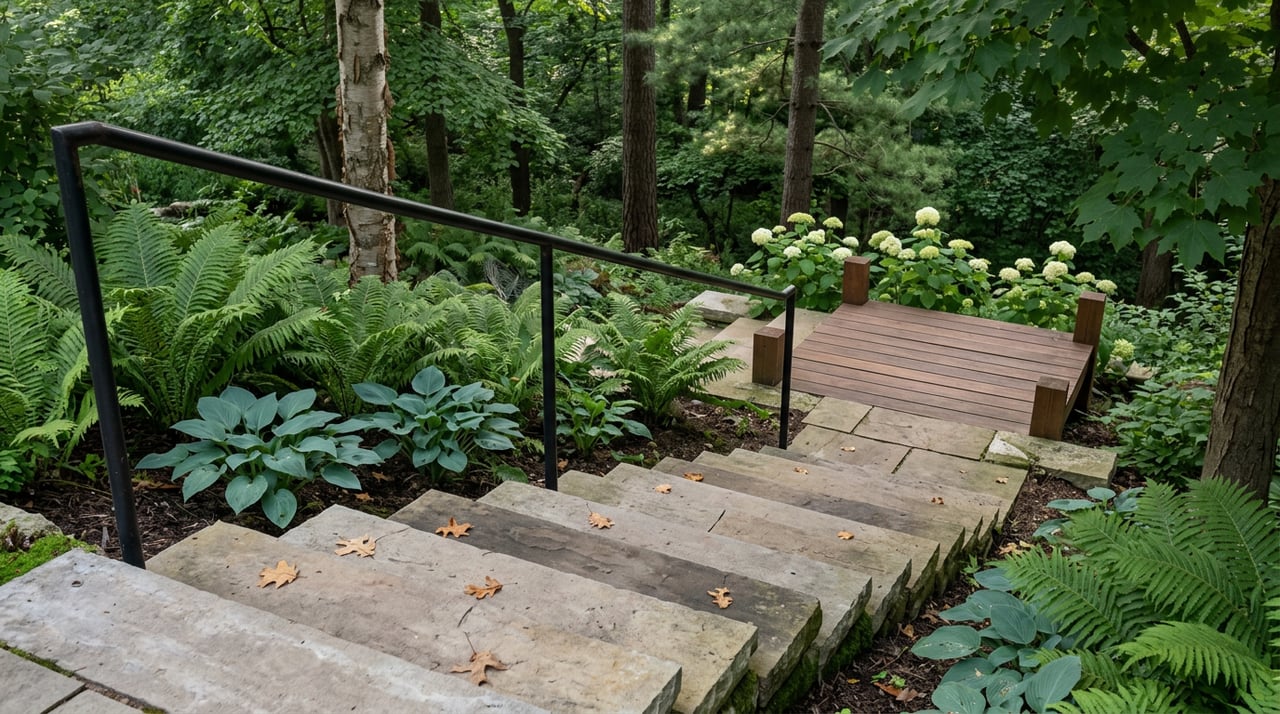
- City of Deephaven and Hennepin County. City of Deephaven and Hennepin County regulate shoreland setbacks, docks, and impervious surface limits. Local permit history can affect existing structures at an access point. A stairway or landing that predates current rules may be legally nonconforming, which is fine until someone tries to replace it.
- The Minnesota DNR. The state's shoreland rules set the floor. State standards cap total impervious surface at 25% of the lot and require setbacks measured from the Ordinary High Water Level, which is often where private upland ends and state waters begin. Local ordinances can be, and in Deephaven usually are, more restrictive.
Each layer can veto the ones above it. That is why a clean deed alone is not proof of anything, and why an LMCD slip authorization from 2011 is not proof that the same configuration is buildable in 2026.
What "access" actually looks like on the ground
Deephaven's shoreline patterns are older than most of its owners. Deephaven and nearby pockets on Lake Minnetonka often feature small access strips or community docks serving a handful of homes. Community docks or buoys managed by an HOA or a group of owners, with rules on slip assignment and seasonal use. Foot-path access without on-site parking. Street parking rules may apply. Varied rights by plat. Some developments conveyed a small fee-owned parcel to an association, while others created non-exclusive easements. LMCD limits that shape the number and size of slips regardless of deed language.
Cottagewood is the cleanest example. The neighborhood is anchored by the Cottagewood General Store, sits off Carsons Bay, and includes homes that share access rather than own frontage outright. Rocky Beach and Sandy Beach serve the community, not any single parcel. A buyer who assumes a Cottagewood address implies a private dock is already misreading the plat.
The Minnetonka Yacht Club on Lighthouse Island is a related nuance. Membership is a separate contract from any home purchase, and a listing that mentions the club does not convey a slip with the closing.
The paperwork order that protects the closing
At current pace, this diligence has to happen before the contingency period ends, not during the title review. The three-month median sale price in Deephaven through May 2026 was $1.7 million, with homes averaging 15 days on market, down from 35 days a year earlier and up to 10 sales that month. That speed changes the calculus. It compresses the window for reading a 40-year-old easement and calling three agencies to reconcile it.
A workable sequence:
| Item | Where it lives | When to pull it |
|---|---|---|
| Recorded easement or access deed | Hennepin County recorder | Before inspection deadline |
| Title commitment exceptions | Title company | Immediately upon opening title |
| LMCD dock license and slip count | Lake Minnetonka Conservation District records | Before contingency removal |
| City permit history for stairs, landings, retaining walls | City of Deephaven | Before contingency removal |
| DNR OHWL and shoreland classification | MN DNR | Alongside survey review |
| Survey showing setbacks and impervious coverage | Seller, or ordered fresh | Before appraisal |
Public water status supports navigation on the lake, but you still need a private right to cross shoreland to reach it. Ask your title company to insure the access right and review the title commitment exceptions so you know what is and is not covered. A standard owner's policy does not automatically insure an easement unless the endorsement is requested.
One more subtlety worth flagging early. An in gross right belongs to a person or entity and may not transfer with your purchase unless the document allows it, so verify before you rely on it. Easements written to a specific person, rather than to the land, are the paperwork equivalent of a lease ending on closing day.
Disclosures that surface late on lake homes
Minnesota's seller disclosure obligation is broader than most out-of-state buyers expect. Minnesota requires a written seller disclosure of all material facts known to the seller that could adversely and significantly affect the ordinary or intended use of the property. Under Minnesota Statutes Chapter 513, that disclosure must be made in good faith before signing the agreement, and updated before closing if the seller later learns it was inaccurate.
Lake homes add a second stack. Minnesota also requires disclosure of known wells before signing, a well disclosure certificate at closing, septic disclosure describing how sewage is managed, prior septic inspection reports if the seller has them, and radon disclosure with the required Minnesota Department of Health publication. You can review those requirements in Minnesota Statutes section 103I.235. Older Deephaven properties, especially the ones tied to legacy plats around Carsons Bay and Robinsons Bay, sometimes carry a private well or a septic history that predates municipal service to the parcel. That documentation belongs in the disclosure packet, not the punch list.
A quieter note on pace
Fifteen days on market is not a bug in the Deephaven market, it is a feature of a thin supply of lake-oriented inventory pressing against durable demand. The county-level number tells a different story, with the Hennepin County February 2026 rolling median at $400,000 and 2.0 months of inventory. Deephaven is not that market. A luxury home tied to Lake Minnetonka has to be underwritten on frontage, bay orientation, dock utility, and the transferability of any access right, not on the county median.
The friction rewards preparation on both sides. Sellers who assemble the LMCD authorization, city permit history, easement recordings, and current survey before listing tend to hold their price through inspection. Buyers who read those documents before removing contingencies tend to close on schedule.
Common questions
Does "deeded access" include a dock? Dock rights depend on the deed or easement language and on permits from the LMCD and the City of Deephaven. Many access easements are non-exclusive and shared among several named lots. The word "access" is not synonymous with dockage.
If the seller has had a dock in place for years, is it grandfathered? Not automatically. A structure can be legally present under prior rules and still fail to qualify for like-for-like replacement under current ones. Review the recorded documents and check LMCD and city records to confirm if any permits or assignments are transferable with the sale.
Where is the actual property line at the water? The DNR notes that the Ordinary High Water Level is often where private upland ends and state waters begin, and structures that extend waterward may require permits. A current survey and the applicable shoreland classification are the two documents that resolve this on a specific parcel.
Can title insurance protect me if the easement turns out to be defective? Only if the access right is affirmatively insured by endorsement. The default policy insures the parcel, not the easement, unless the title company is asked to extend coverage.
Buying into Deephaven should feel like a lifestyle decision, not a paperwork investigation conducted under a deadline. The work of reading the four rulebooks, matching them against a specific parcel, and structuring contingencies that account for shoreline realities is exactly the work a long-tenured local team is built to do. If you are weighing an offer, considering a listing, or trying to understand what your current access rights would convey to a future buyer, Holmers Group would welcome the conversation. Schedule a consultation and we will read the shoreline with you before the clock starts.